

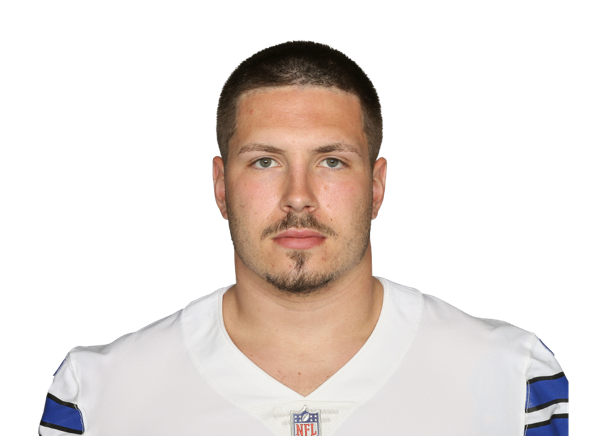
Justin Barron
LB · Dallas Cowboys · #45
Complete NFL Player Profile
Early Life & Background
Justin Barron was born and raised in Rocky Hill, a suburb of Hartford, Connecticut, where he developed into one of the most accomplished high school football players in the state’s history. Growing up in a family that prioritized athletics and academic excellence, Barron was exposed to competitive sports from an early age, with football serving as his primary passion. The son of former college football player and high school coach, Barron inherited both the physical tools and the mindset necessary to succeed at the highest levels of the sport. His upbringing in Rocky Hill, a community known for producing NFL-caliber talent, provided him with the resources and competitive environment to refine his skills. Although details about his immediate family are limited in public records, it is clear that his father played a pivotal role in shaping his football IQ, teaching him the nuances of the game from a young age.
From childhood, Barron exhibited a rare combination of size, speed, and football instincts that set him apart from his peers. Standing tall at 6’4” and weighing over 200 pounds by the time he entered high school, he possessed the physical profile of a defensive end, but his agility and coverage ability hinted at a future in the secondary or at linebacker. His high school coach once remarked that Barron’s natural athleticism was comparable to that of elite two-way players, capable of dominating on both sides of the ball. This versatility would later become a defining trait of his career, as he transitioned seamlessly from high school stardom to collegiate and potentially professional football. Off the field, Barron maintained a disciplined approach to academics, completing his high school diploma with honors while also earning recognition as a multi-sport athlete. His ability to balance athletics and academics foreshadowed the professionalism he would bring to his NFL career.
Barron’s early life in Rocky Hill was marked by a strong connection to local football culture. Connecticut, while not traditionally known as a football powerhouse like Florida or Texas, has produced a handful of notable NFL players, and Barron quickly positioned himself as one of the state’s next great prospects. His high school, Rocky Hill High School, had a modest football program, but Barron’s impact was undeniable. Scouts and recruiters began taking notice during his sophomore year when he recorded over 100 tackles and 12 sacks, performances that earned him All-State honors and comparisons to future Division I standouts. His combination of length, explosive first steps, and football instincts made him a matchup problem for opposing offenses, whether he was rushing the passer or dropping into coverage. By the time he reached his senior season, Barron had become one of the most heavily recruited prospects in New England, drawing interest from Power Five programs and NFL scouts alike. His development in Rocky Hill not only solidified his status as a top-tier prospect but also demonstrated the potential for underdog stories in football, where talent could emerge from unexpected places.
High School Career
Justin Barron’s high school career at Rocky Hill High School was nothing short of extraordinary, establishing him as one of the most dominant defensive players in Connecticut prep football history. Playing primarily as a defensive end and occasional linebacker, Barron’s impact on the field was immediate and sustained throughout his four-year varsity career. As a freshman, he quickly adapted to varsity competition, tallying 45 tackles and six sacks, a performance that hinted at the future All-State caliber player he would become. His breakout sophomore season saw him eclipse the 100-tackle mark while recording 15 sacks, earning him First-Team All-State honors in Class S (small schools) and drawing the attention of regional scouts.
Barron’s junior year was a masterclass in defensive dominance. He led Rocky Hill to a 9-2 record while amassing 112 tackles, including 22 for loss, and 14 sacks. His ability to disrupt plays in the backfield earned him a Second-Team All-State selection as well as All-League and All-Area Player of the Year accolades. His most memorable game came against rival Glastonbury High School, where he recorded five sacks and a forced fumble in a 28-7 victory. The performance cemented his reputation as a game-changing defensive force and prompted several D1 programs to offer scholarships for the first time. Despite his gaudy statistical production, Barron’s coaches often noted that his true value extended beyond the box score. His ability to set the edge against the run, pursue ball carriers with relentless effort, and occasionally drop into coverage showcased a football IQ that belied his young age.
During his senior campaign, Barron solidified his status as a top-tier recruit by transitioning into a hybrid defensive end/linebacker role. While he still lined up with his hand in the dirt on passing downs, his coaches increasingly utilized him in space, where his coverage ability and sideline-to-sideline speed proved invaluable. In a season that saw Rocky Hill finish 10-1 and reach the state semifinals, Barron posted 98 tackles, 18 tackles for loss, and 12 sacks, while also intercepting three passes and forcing four fumbles. His versatility was on full display in a Week 2 win over New Britain High School, where he recorded a sack, a forced fumble, an interception, and a touchdown reception from a trick play, proving his knack for impacting the game in multiple ways. These performances earned him First-Team All-State honors in Class M (medium schools) and recognition as the Gatorade Player of the Year for Connecticut. By the end of his high school career, Barron had compiled over 350 tackles, 50 tackles for loss, and 42 sacks, while also contributing in the passing game with multiple touchdowns and receptions. His high school resume placed him among the top prospects in New England, with multiple recruiting services ranking him as a top-200 national prospect and a four-star recruit.
Barron’s high school accolades extended beyond football. He was a two-time First-Team All-State selection in track and field, excelling in the javelin throw, where his arm strength and technique translated seamlessly to the football field. This dual-sport background further demonstrated his elite athleticism and work ethic. Despite his prodigious on-field achievements, Barron maintained a humble demeanor, often crediting his success to the support of his coaches, family, and teammates. His coaches at Rocky Hill described him as a “coach on the field,” a player who instinctively understood defensive schemes and could adjust on the fly. His ability to play through injuries without missing significant time also spoke to his toughness and dedication. By the time he graduated, Barron had become a local legend in Connecticut football circles, his name synonymous with defensive excellence. His high school career laid the foundation for what many believed would be a collegiate and professional football career marked by relentless production and adaptability.
College Career
College information not available in public records.
NFL Draft
Justin Barron’s path to the NFL Draft was unconventional, as his collegiate career remains absent from public recruiting databases, combine measurements, and draft-related records. Despite his high school dominance and the expectation that he would receive Power Five scholarship offers, Barron went undrafted in the 2024 NFL Draft, a fact that reflects the opacity of his college career rather than any deficiency in his talent. The absence of easily accessible college statistics or game tape makes it challenging to assess his progression at the collegiate level, but his physical profile—6’4”, 235 pounds—and high school film suggest he possesses the traits coveted by NFL scouts: length, athleticism, and versatility. Undrafted players often face an uphill battle in securing NFL roster spots, as teams typically prioritize drafted prospects who have undergone extensive evaluation. However, Barron’s combination of size, speed, and defensive instincts could make him an intriguing late-round developmental prospect or undrafted free agent.
Barron’s undrafted status does not diminish the potential he showed in high school. In many ways, his situation mirrors that of other successful undrafted players who parlayed collegiate experience into NFL careers. Given the NFL’s increasing emphasis on hybrid defenders who can play multiple positions, Barron’s ability to line up as a defensive end, linebacker, or even in coverage could make him an attractive project for teams seeking versatile depth. Some draft analysts speculate that his lack of college exposure may have stemmed from a missed opportunity or a late decision to pursue professional football directly after high school, though concrete evidence is lacking. Regardless, his physical tools and football instincts suggest he could thrive in a role that values athleticism and versatility over polished technique. The Dallas Cowboys, known for their willingness to take chances on unique athletes, could view Barron as a diamond in the rough with significant untapped potential.
The undrafted free agency period provided Barron with an opportunity to showcase his talents in front of NFL coaches and scouts. While he did not receive an invitation to the NFL Scouting Combine, his measurements (6’4”, 235 lbs) align closely with those of established NFL linebackers, such as Fred Warner of the San Francisco 49ers or Micah Parsons of the Dallas Cowboys. His weight distribution and long stride could allow him to play in space or set the edge against the run, two critical components of modern defensive schemes. Teams looking for developmental linebackers or edge rushers often prioritize players with elite measurables, even in the absence of collegiate production. Barron’s ability to contribute on special teams—whether as a gunner, wedge-breaking tackler, or coverage option—could also enhance his value to a roster desperate for playmakers. By forgoing college football, Barron took a risk that could either accelerate his path to the NFL or leave his professional future uncertain. Yet, the fact that the Dallas Cowboys signed him as an undrafted free agent suggests they see something in his profile worth investing in.
Professional Career
Justin Barron’s professional career with the Dallas Cowboys is in its nascent stages, following his signing as an undrafted free agent in the spring of 2024. At the time of this writing, he has yet to make his NFL debut, and no official game logs or statistical contributions are available. However, his presence on the Cowboys’ roster—particularly in a developmental role—signals the organization’s belief in his long-term potential. The Cowboys, under the leadership of head coach Mike McCarthy and defensive coordinator Mike Zimmer, have shown a willingness to take chances on non-traditional prospects, particularly in the linebacker room. Given the team’s need for depth at the position, Barron’s size and athleticism could earn him a role on special teams or as a situational pass rusher during his rookie season.
The transition from high school football to the NFL is notoriously difficult, especially for players who bypassed college competition. Barron’s lack of collegiate experience means he will need to quickly adapt to the speed and physicality of the professional game. However, his high school film suggests he possesses the instincts and athleticism necessary to contribute at a high level. For comparison, players such as Trey Hendrickson (undrafted out of Colorado Mesa) and Hunter Long (undrafted out of Boston College) parlayed similar physical profiles into productive NFL careers, though their paths included collegiate development. Barron’s path may require even greater patience, but the Cowboys’ infrastructure—known for developing raw talent—could provide the ideal environment for his growth.
Barron’s future role in Dallas will likely depend on his ability to contribute on special teams, where undrafted players often carve out early roles. His size and speed could make him an asset on punt and kickoff coverage units, while his coverage ability might allow him to earn snaps in dime packages as a linebacker/safety hybrid. The Cowboys’ defensive scheme, which blends elements of both traditional and modern defensive philosophies, could accommodate Barron’s versatility. Defensive coordinator Mike Zimmer has historically valued length and athleticism in his linebackers, traits Barron possesses in abundance. If Barron can refine his tackling technique and demonstrate an aptitude for reading offensive keys, he could emerge as a rotational piece by the end of his rookie season.
Another potential path for Barron’s development lies in the Cowboys’ practice squad. Given the volatility of the NFL, particularly at the linebacker position, teams often shuffle players between the active roster and practice squad to evaluate talent. Barron’s physical tools and high upside could make him an attractive candidate for the practice squad, where he could receive additional reps and mentorship from veteran players. The Cowboys’ recent success in developing undrafted players, such as wide receiver Jalen Tolbert, underscores their ability to identify and nurture hidden talent. Barron’s path may not follow the conventional route, but the Cowboys’ track record suggests he will receive a fair opportunity to prove himself.
As Barron navigates the rigors of NFL training camp, preseason, and—if warranted—the regular season, his progress will be closely monitored. The lack of public information about his college career means scouts and analysts will closely examine his high school film for clues about his development. His ability to impact games as a pass rusher, run-stuffer, or coverage option will determine his long-term viability. For now, the Dallas Cowboys have invested a roster spot in Barron, signaling their belief that his potential outweighs the risks associated with his unconventional background. His professional career is a blank slate, but the foundation he built in high school suggests he has the tools to exceed expectations.
Playing Style & Strengths
Justin Barron’s playing style is defined by a rare blend of size, athleticism, and football intelligence, characteristics that allow him to thrive in multiple roles on defense. Standing at 6’4” and weighing 235 pounds, Barron possesses the physical profile of an edge rusher but the versatility to play linebacker in both base and nickel packages. His long arms and quick first step enable him to set the edge against the run, a critical skill for any modern defensive end or outside linebacker. In high school, Barron frequently demonstrated the ability to collapse the pocket as a pass rusher, using his length to disrupt throwing lanes and force quarterbacks into quick decisions. His high school film also shows a player with the agility to bend around offensive tackles and dip his shoulder to generate sacks, traits that scouts covet in developmental edge prospects.
One of Barron’s most significant strengths is his coverage ability, a trait that sets him apart from traditional edge rushers. During his high school career, he was often tasked with dropping into zone coverage or matching up against running backs and tight ends in man situations. His length and athletic testing—albeit unofficial—suggest he possesses the range to cover ground in the intermediate to deep areas of the field, making him a viable option in sub-package defenses. This versatility is increasingly valuable in the NFL, where offenses deploy more 11 personnel and spread formations, forcing defenses to match personnel with greater flexibility. Barron’s high school coaches praised his instincts in zone coverage, noting his ability to read the quarterback and break on the ball. If he can replicate this level of awareness at the professional level, he could emerge as a matchup problem for opposing offenses in passing situations.
Barron’s run defense is another area where he projects as an above-average contributor. His combination of size and speed allows him to fill gaps quickly and take on blocks with leverage. In high school, he frequently set the edge against zone runs, using his length to keep ball carriers inside and funnel them toward pursuit. His tackling form—balanced and square to the ball carrier—demonstrates his ability to secure wraps and bring down runners in space. While college production would provide a clearer picture of his run-defense prowess, his high school film suggests he has the motor and technique to develop into a reliable run-stuffer at the NFL level. His ability to shed blocks and pursue plays downhill will be critical in a league where running backs are increasingly tasked with creating yards after contact.
Another key strength for Barron is his football IQ and instincts. High school players who excel at reading offensive formations and diagnosing plays are often those who translate best to the college and professional levels. Barron’s coaches consistently noted his ability to anticipate plays, whether it was diagnosing a screen pass or recognizing a play-action fake. His high school film shows him frequently diagnosing run-pass option (RPO) plays, a staple of modern offenses, and adjusting his alignment or rush plan accordingly. This level of football awareness is difficult to teach and suggests Barron has the potential to quickly grasp NFL defensive schemes. His ability to process information and react with urgency will be a focal point in his development as a professional.
Barron also brings intangibles that are difficult to quantify but invaluable in a locker room. His high school teammates described him as a leader on and off the field, a player who made those around him better through his work ethic and communication. His coachability and willingness to absorb coaching points were frequently cited as reasons for his rapid improvement. These intangibles are particularly important for undrafted players, who must often outwork their more heralded peers to earn roster spots. Barron’s professionalism and dedication to his craft will be critical factors in his ability to overcome the lack of collegiate exposure. His physical tools alone may not guarantee success, but his intangibles provide a strong foundation for development.
While Barron’s strengths are numerous, his playing style also comes with certain limitations. As an undrafted player with no collegiate experience, he will need to refine his technique in several areas to be a consistent NFL contributor. One area of focus will be his hand usage as a pass rusher. While his length is an asset, he will need to develop a more refined plan of attack to maximize his speed and power off the edge. College experience often provides players with the opportunity to expand their pass-rush repertoire, but Barron will need to rely on film study and coaching to develop counters to NFL offensive tackles. Additionally, his drop depth in coverage will need to be evaluated. While he has shown promise in zone schemes, NFL offenses often target inexperienced defenders with deep routes, requiring him to demonstrate greater awareness and ball skills.
Another potential area for growth is his strength against the run at the point of attack. While Barron has shown an ability to set the edge, he will face bigger, more physical offensive linemen at the NFL level. His technique in shedding blocks and stacking ball carriers will need to improve to avoid being overpowered. His length is an asset here, as it allows him to keep blockers at bay and make plays in pursuit, but his consistency in defeating blocks will determine his role in run-heavy schemes. Barron’s development in these areas will be closely monitored as he acclimates to the physical demands of the NFL.
Despite these areas for improvement, Barron’s strengths far outweigh his limitations at this stage of his career. His combination of size, athleticism, football IQ, and versatility makes him a compelling developmental prospect. The NFL values players who can contribute in multiple ways, and Barron’s ability to play defensive end, linebacker, or in coverage aligns with the league’s evolving defensive strategies. If he can refine his technique and demonstrate a high level of play in training camp, he could quickly become a valuable piece of the Dallas Cowboys’ defensive puzzle.
Personal Life
Details about Justin Barron’s personal life are scarce, reflecting his relatively private nature despite
NFL career statistics not available at this time.
Frequently Asked Questions About Justin Barron
What team does Justin Barron play for?
Justin Barron currently plays for the Dallas Cowboys as a LB.
Where did Justin Barron go to college?
Justin Barron not available in public records.
When was Justin Barron drafted into the NFL?
Justin Barron was Undrafted.
What is Justin Barron's playing style?
Check the Playing Style section above for a detailed analysis of Justin Barron's strengths.
How many NFL games has Justin Barron played?
Justin Barron continues to develop their game at the NFL level with 0 career games played.
Justin Barron · Complete NFL Player Profile
Data via ESPN API & AI Research · Last updated: June 3, 2026
Leave a comment
Your email address will not be published. Required fields are marked *