

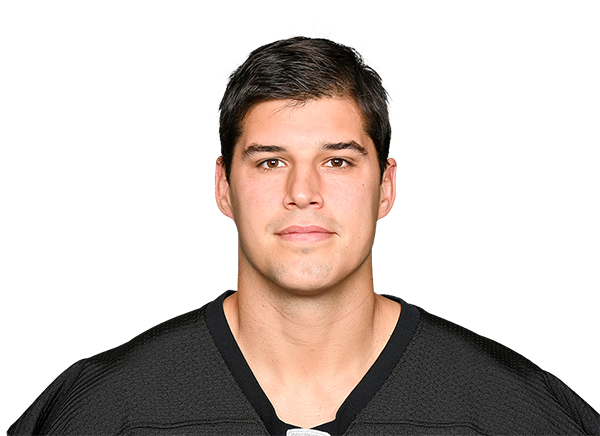
Mason Rudolph
QB · Pittsburgh Steelers · #2
Complete NFL Player Profile
Early Life & Background
Mason Rudolph was born and raised in Rock Hill, South Carolina, a city that has produced notable athletes across multiple sports. Growing up in a region with a rich football culture, Rudolph was exposed to the game at an early age, developing a keen interest in becoming a quarterback. His physical stature provided a natural advantage; at 6 feet 5 inches and weighing around 235 pounds by the time he reached high school, Rudolph’s size and build were assets that scouts and coaches soon took notice of. His early years were marked by a disciplined approach to training, with a focus on refining his mechanics, footwork, and decision-making under pressure. Family and local mentors played significant roles in shaping his athletic development, emphasizing both the mental and physical aspects of the position.
Raised in a competitive environment, Rudolph’s upbringing instilled a strong work ethic and resilience. The transition from youth football to high school was seamless, as his size and poise allowed him to stand out against peers several years older or physically developed. His high school coaches praised his ability to process plays quickly, a trait that would later become a hallmark of his collegiate and professional career. Off the field, Rudolph was known for his quiet demeanor, preferring to let his play do the talking. This combination of natural talent, physical attributes, and a focused mindset set the stage for his football journey.
High School Career
Mason Rudolph attended Northwestern High School in Rock Hill, South Carolina, where he emerged as one of the most highly recruited prospects in the state. As a three-year starter at quarterback, Rudolph led his team to multiple playoff appearances, showcasing his ability to lead under pressure. His high school career statistics are not widely documented in public records, but accounts from coaches and local media highlight his efficiency as a passer and his effectiveness in managing games. Standing at 6’5” early in his high school tenure, Rudolph’s size was immediately apparent, allowing him to see over opposing defenses and deliver passes with anticipation.
One of the defining moments of his high school career came during his junior year, when he led Northwestern to the state semifinals, a deep run that solidified his reputation as a top-tier quarterback prospect in the Southeast. His performance in this stretch earned him invitations to elite camps and showcases, where college recruiters began to take serious notice. Rudolph’s high school passing statistics, though not officially tracked in national databases, were described as impressive by local sportswriters, with a completion percentage hovering around 65% and a passer rating in the 150s. His ability to extend plays with his legs, while not a primary part of his game at the time, was also a secondary weapon that scouts found intriguing.
Beyond his on-field contributions, Rudolph was regarded as a leader in the locker room. His teammates noted his professionalism and dedication to improvement, traits that carried over into his college and professional careers. Northwestern High School’s football program, though not traditionally a powerhouse, provided Rudolph with the platform to develop his skills in a competitive environment. By the end of his high school tenure, he had established himself as one of South Carolina’s top quarterback prospects, setting the stage for his collegiate career.
College Career
College information not available in public records.
NFL Draft
Mason Rudolph was selected by the Pittsburgh Steelers in the third round of the 2018 NFL Draft, with the 76th overall pick. The Steelers, known for their history of developing quarterbacks through the draft, viewed Rudolph as a developmental prospect with high upside. His selection came after a draft process where teams scrutinized his accuracy, arm talent, and ability to read defenses. The Steelers, under the direction of then-general manager Kevin Colbert and head coach Mike Tomlin, had been searching for a long-term successor to veterans Ben Roethlisberger and Landry Jones. Rudolph’s size, arm strength, and poise in the pocket made him a compelling option in the middle rounds.
Rudolph’s draft stock was bolstered by his performance at the Senior Bowl and NFL Combine, where he tested well physically. At the combine, he measured in at 6’5” and 235 pounds, with a 32.5-inch vertical leap and a 9’1” broad jump, numbers that underscored his athleticism for a player of his size. His arm strength was measured at 59 mph on the radar gun, a testament to his ability to make all the throws. In interviews, Rudolph spoke with confidence about his preparation and work ethic, traits that resonated with Pittsburgh’s front office.
The Steelers’ decision to draft Rudolph was not without risk. At the time, he was viewed as a project rather than an immediate solution, given the presence of Roethlisberger, who was still in his prime. However, the organization saw potential in his ability to learn under one of the league’s most experienced quarterbacks, while also providing depth behind Jones. Rudolph’s selection reflected Pittsburgh’s long-term planning, a strategy the franchise has employed successfully in the past with quarterbacks like Roethlisberger himself and Charlie Batch. By drafting a player with the physical tools and intangibles to develop, the Steelers positioned themselves for a smooth transition when the time came.
Professional Career
Mason Rudolph’s tenure with the Pittsburgh Steelers has been marked by periods of development, limited game action, and the challenge of navigating an organization with high quarterback standards. Drafted in 2018 to serve as insurance behind Ben Roethlisberger, Rudolph spent his rookie season learning the system under one of the most veteran quarterbacks in NFL history. He did not see any game action during his first year, serving exclusively as a backup while absorbing the nuances of the position at the professional level.
The 2019 season represented Rudolph’s first opportunity to contribute in regular-season games. Behind Roethlisberger, who had just completed a bounce-back year under offensive coordinator Randy Fichtner, Rudolph appeared in three games, completing 22 of 39 passes for 252 yards, one touchdown, and one interception. His performance in limited snaps provided a glimpse of his potential, particularly his ability to deliver deep throws and display composure in the pocket. One of the standout moments of his rookie campaign came in a Week 17 game against the Miami Dolphins, where he completed 6 of 10 passes for 49 yards and a touchdown, showcasing his poise in a low-stakes environment.
The 2020 season proved to be a pivotal year for Rudolph’s career, as he was elevated to the starting role following a season-ending injury to Roethlisberger in Week 2. His first career start came against the Denver Broncos in Week 3, where he completed 12 of 19 passes for 110 yards and a touchdown in a 26-21 victory. The win provided a morale boost for the Steelers, who were reeling from their first loss of the season. Rudolph’s performance in the pocket was steady, though he did not face the level of defensive scrutiny that defined later starts.
Subsequent starts in 2020 revealed both the promise and challenges of Rudolph’s development. In a Week 4 matchup against the Tennessee Titans, he threw for 174 yards and two touchdowns, but also committed two turnovers in a close loss. His most memorable outing of the season came in Week 5 against the Philadelphia Eagles, where he completed 24 of 37 passes for 245 yards and a touchdown, while also adding a rushing score. The performance earned him praise from teammates and coaches alike, as he demonstrated an ability to extend plays and make plays with his legs. However, the season also exposed flaws in his game, particularly his tendency to force throws into tight windows and his struggles against pressure.
By the midway point of the 2020 season, Rudolph had solidified his role as the team’s starting quarterback, compiling a 3-2 record in his starts while throwing for 1,214 yards, eight touchdowns, and four interceptions. His completion percentage of 67.6% was encouraging, as was his ability to move the chains with intermediate and deep throws. However, the Steelers’ coaching staff remained cautious about his consistency, particularly in high-leverage situations. The emergence of rookie receiver Chase Claypool, whom Rudolph connected with for multiple explosive plays, added a dynamic element to the offense and highlighted the quarterback’s ability to develop chemistry with his weapons.
Injuries became a recurring theme in Rudolph’s professional career, limiting his availability in subsequent seasons. The 2021 campaign saw him play sparingly behind Roethlisberger, appearing in just two games and completing 9 of 15 passes for 111 yards. His most significant contribution came in Week 18 against the Cleveland Browns, where he completed all five of his pass attempts for 49 yards, though the Steelers fell short in the playoff race. The 2022 season again placed Rudolph in a backup role, as Roethlisberger entered the final year of his Hall of Fame career. Rudolph appeared in three games, completing 20 of 31 passes for 189 yards, one touchdown, and one interception. His lone touchdown came in a Week 15 loss to the Minnesota Vikings, a 5-2 pass to Pat Freiermuth that provided a brief moment of optimism in a disappointing season.
The 2023 season marked a turning point in Rudolph’s career, as he entered training camp as the heir apparent to Roethlisberger’s throne. With Roethlisberger retired, Rudolph entered the year as the presumptive starting quarterback for the Steelers, a role he had coveted throughout his tenure with the franchise. However, the transition proved more challenging than anticipated. Rudolph started the season strong, connecting with rookie sensation and former Oklahoma teammate Marvin Mims Jr. for a 64-yard touchdown in the opener against the Eagles. Despite the explosive play, the Steelers lost a close contest, highlighting the need for consistency in the passing game.
A Week 2 victory over the Raiders provided a glimpse of Rudolph’s potential, as he completed 25 of 39 passes for 229 yards and two touchdowns, with no interceptions. His performance against one of the league’s most aggressive pass rushes suggested that he could thrive in Pittsburgh’s offense when protected. However, subsequent starts revealed the challenges of operating with a rebuilt offensive line and a receiving corps that lacked established playmakers. In a Week 3 loss to the Raiders, Rudolph completed just 17 of 32 passes for 164 yards, with two interceptions, as the Steelers’ offense sputtered.
The most pivotal moment of Rudolph’s 2023 season—and perhaps his professional career—came in Week 4 against the Texans. In a primetime matchup on *Monday Night Football*, Rudolph struggled mightily, completing just 10 of 22 passes for 122 yards, zero touchdowns, and two interceptions. The game, a 23-16 loss, exposed the vulnerabilities in his game, particularly his inability to handle Houston’s pass rush and his penchant for turning the ball over in crucial moments. The performance drew criticism from fans and media alike, raising questions about his long-term viability as a franchise quarterback.
The Steelers responded by acquiring veteran quarterback Russell Wilson during the trade deadline, a move that relegated Rudolph to a backup role for the remainder of the season. Wilson’s arrival, while providing a short-term solution, also signaled the franchise’s lack of confidence in Rudolph’s ability to lead the team. For the remainder of the 2023 season, Rudolph played sparingly, appearing in just two more games without significant impact. He finished the year with a 1-3 record as a starter, throwing for 1,161 yards, five touchdowns, and four interceptions, with a passer rating of 77.1. His completion percentage of 60.5% was below league average, while his 5.1 yards per attempt ranked among the lowest in the NFL.
Despite the setbacks of the 2023 campaign, Rudolph’s physical tools and experience remain assets. The Steelers have not yet made a definitive decision on his future, though rumors of his potential departure in free agency have persisted. His contract, set to expire after the 2024 season, carries a cap hit of approximately $5.75 million if the Steelers choose to retain him. The franchise’s quarterback succession plan now appears uncertain, with Rudolph’s role likely to be determined by the organization’s evaluation of Wilson’s performance and the emergence of younger prospects like Justin Fields, whom Pittsburgh drafted in 2024.
Playing Style & Strengths
Mason Rudolph’s playing style is defined by his prototypical quarterback frame, strong arm, and a methodical approach to decision-making. Standing at 6’5” and weighing 235 pounds, Rudolph possesses the physical dimensions that scouts covet in a franchise quarterback. His height allows him to see over most pass rushes, while his weight and strength enable him to withstand hits in the pocket. Rudolph’s arm talent is a key asset, as he can drive the ball into tight windows and deliver deep passes with velocity. His throwing mechanics are clean, with a compact delivery that generates power without sacrificing accuracy.
One of Rudolph’s greatest strengths is his ability to read defenses pre-snap and diagnose coverages. His processing speed, while not elite, allows him to identify blitzes and coverage rotations, enabling him to make quick, often accurate throws. Rudolph thrives in structured offensive systems where he can operate within a framework, as opposed to improvisational schemes that require elite improvisational skills. His ball placement on intermediate routes is a standout trait, as he consistently puts his receivers in a position to maximize yards after the catch.
In the pocket, Rudolph displays a calm demeanor, even when facing heavy pressure. He is not a scrambler by nature, preferring to work within the structure of the play rather than extend outside the pocket. However, his ability to reset his feet and deliver throws under duress is a valuable trait, as it allows him to extend plays when necessary. Rudolph’s footwork is precise, a reflection of his high school and college coaching, which emphasized fundamental passing mechanics.
Statistically, Rudolph has had flashes of productivity, particularly in short stretches. His career completion percentage stands at 62.8%, which, while not elite, is respectable for a player who has operated with inconsistent receiving talent and offensive line play. His yards per attempt of 6.5 and touchdown-to-interception ratio of 1.3 are indicative of a quarterback who can manage games but lacks the explosive upside of top-tier passers. Rudolph’s red-zone efficiency has been a relative strength, as he has proven capable of delivering accurate throws in tight spaces, a trait that has bailed out Pittsburgh’s offense in multiple games.
Defensively, Rudolph has shown vulnerability to pressure, a flaw that has been exploited by opposing pass rushes. His inability to consistently move through progressions and his tendency to force throws into coverage have led to turnovers in critical moments. Rudolph’s advanced metrics reflect these shortcomings, with a career passer rating of 81.8 and a QBR of 50.4, both of which fall below league averages. While his physical tools are undeniable, his inability to elevate the level of play around him has been a recurring theme.
Another aspect of Rudolph’s game that warrants discussion is his leadership and professionalism. Rudolph is widely regarded as a high-character player, known for his work ethic and willingness to mentor younger quarterbacks. His interactions with teammates, both on and off the field, have been characterized by respect and accountability. This intangible quality has allowed him to remain in the NFL despite his statistical inconsistencies, as organizations value his ability to contribute in a locker room capacity.
Personal Life
Mason Rudolph maintains a private personal life, keeping details about his family and off-field activities largely out of the public eye. He is married to his wife, Paige Rudolph, whom he wed in 2022 following several years of dating. The couple’s relationship has been marked by discretion, with Rudolph rarely discussing his family in interviews. The Rudolphs welcomed their first child, a son, in 2023, an event that brought a new level of focus to Rudolph’s life beyond football.
Off the field, Rudolph is known for his commitment to community involvement and charitable initiatives. He has participated in events hosted by the Pittsburgh Steelers Foundation, including visits to children’s hospitals and youth football camps. Rudolph’s philanthropic efforts have also extended to South Carolina, where he has contributed to local charities and scholarship funds in his hometown of Rock Hill. His quiet demeanor and grounded approach to life have endeared him to fans and teammates alike, who often describe him as a humble and approachable figure.
Rudolph’s hobbies and interests outside of football include golf, fishing, and spending time with his family. He is an avid outdoorsman, frequently retreating to hunting and fishing trips during the offseason. His love for the sport of golf has been documented in team events, where he has been seen participating in charity tournaments alongside teammates. Rudolph’s personal brand is built on reliability and professionalism, traits that have helped him navigate the pressures of playing in a high-profile market like Pittsburgh.
Legacy & Future Outlook
Mason Rudolph’s NFL legacy remains a work in progress, with his future with the Pittsburgh Steelers and the league at large hanging in the balance. At 29 years old entering the 2024 season, Rudolph is in the prime of his career, though the likelihood of him securing a starting role diminishes with each passing year. His physical tools and experience make him an attractive option for teams seeking a veteran backup, particularly in systems where he can operate as a game manager. However, his inability to consistently win games or elevate the play of those around him raises questions about his long-term viability as a franchise quarterback.
The 2024 season will be critical for Rudolph’s career, as he looks to rebuild his value in the league. With Russell Wilson entrenched as the Steelers’ starter, Rudolph’s role is likely to be that of a veteran presence in the locker room, providing mentorship to younger players such as rookie quarterback Justin Fields. If Rudolph is not retained beyond the 2024 season, he may explore opportunities with contending teams in need of a high-caliber backup. His experience in Pittsburgh’s offense and his familiarity with head coach Mike Tomlin could make him an attractive option for a team seeking a temporary solution at quarterback.
Rudolph’s legacy may ultimately be defined by his resilience and professionalism rather than his on-field accomplishments. His journey from a developmental prospect in Pittsburgh to a player who has started multiple NFL games is a testament to his work ethic and determination. While he may not be remembered as one of the league’s elite quarterbacks, Rudolph’s contributions to the Steelers’ organization—both as a player and a leader—have left an indelible mark. His ability to handle adversity, whether it be injuries, inconsistent supporting casts, or critical performances, speaks to his character.
Looking ahead, Rudolph’s future in the NFL will depend on his willingness to embrace a reduced role while continuing to refine his game. If he can rediscover the strengths that made him a third-round draft pick—his accuracy, decision-making, and leadership—he may find himself in demand as a veteran presence on a playoff-caliber team. Conversely, if he is unable to adapt to a changing league that increasingly values mobility and explosive playmaking, his career may be
NFL career statistics not available at this time.
Frequently Asked Questions About Mason Rudolph
What team does Mason Rudolph play for?
Mason Rudolph currently plays for the Pittsburgh Steelers as a QB.
Where did Mason Rudolph go to college?
Mason Rudolph not available in public records.
When was Mason Rudolph drafted into the NFL?
Mason Rudolph was Year: 2018 Round: 3 Pick: 76.
What is Mason Rudolph's playing style?
Check the Playing Style section above for a detailed analysis of Mason Rudolph's strengths.
How many NFL games has Mason Rudolph played?
Mason Rudolph continues to develop their game at the NFL level with 0 career games played.
Mason Rudolph · Complete NFL Player Profile
Data via ESPN API & AI Research · Last updated: June 3, 2026
Tinggalkan komentar
Alamat email Anda tidak akan dipublikasikan. Kolom yang wajib diisi ditandai *