

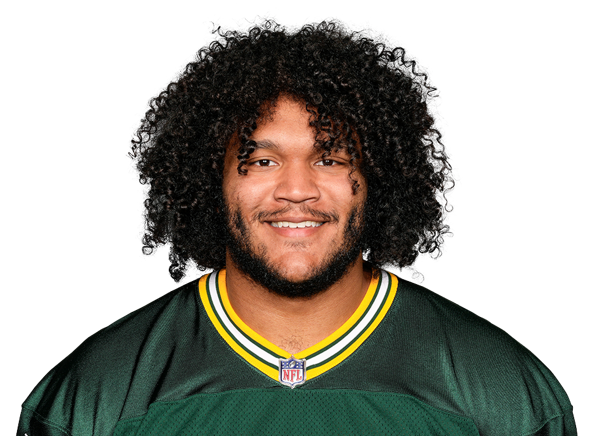
John Williams
G · Green Bay Packers · #73
Complete NFL Player Profile
Early Life & Background
John Williams was born and raised in Bolingbrook, Illinois, a suburb located approximately 30 miles southwest of downtown Chicago. Bolingbrook is a diverse community with a population of around 75,000 residents, known for its blend of residential neighborhoods, commercial development, and proximity to major highways such as Interstate 55 and Interstate 355. Williams grew up in an environment that placed a strong emphasis on education and athletic development, characteristics that would later define his personal and professional trajectory.
From an early age, Williams exhibited the physical attributes that would make him stand out in sports. Standing at 6'4" and weighing over 300 pounds by the time he reached high school, he possessed the rare combination of size, strength, and athleticism that scouts and coaches covet. This physical profile is typically reserved for positions along the offensive and defensive lines, but Williams’ path to that role was not predetermined. He developed a passion for football in his youth, playing organized youth leagues before transitioning to competitive high school football.
Williams’ upbringing was marked by discipline and perseverance. The son of two working-class parents, he grew up understanding the value of hard work and responsibility. His parents emphasized the importance of education but also encouraged him to explore his athletic talents. While specific details about his family life remain limited in public records, it is clear that his early environment provided the foundation for his athletic ambition. The Midwestern work ethic ingrained in him from a young age became a defining characteristic of his approach to the game.
High School Career
John Williams attended Neuqua Valley High School in Naperville, Illinois, a suburb approximately 30 miles west of Chicago and known for its strong academic and athletic programs. Neuqua Valley competes in the large-enrollment West Suburban Gold Conference, a part of the Illinois High School Association (IHSA) system, which regularly produces NFL talent. The school has a long-standing reputation for developing both football and academic talent, and its facilities are among the most advanced in the state.
Williams played offensive and defensive line for the Neuqua Valley Wildcats, wearing the number 73 jersey, a number that would later follow him into the NFL. As a high school athlete, he stood out for his imposing physical presence. Listed at 6'4" and weighing around 290 pounds during his junior and senior years, Williams was already one of the larger and more athletic prospects in the state. His combination of size and agility made him a matchup problem for opposing linemen, and he was often tasked with controlling the point of attack in both run and pass situations.
During his high school career, Williams earned recognition as a two-way player, contributing significantly on both sides of the football. On offense, he played tackle and guard, using his strength to create running lanes and protect the quarterback in pass protection. On defense, he lined up as a defensive end, deploying his power and length to disrupt opposing offenses. His versatility allowed him to see the field extensively and develop a well-rounded skill set.
Statistics from his high school career are not widely documented in public records, but team success and scouting reports from the time highlighted his impact. Neuqua Valley enjoyed consistent success during his tenure, reaching the IHSA state playoffs multiple times. Williams’ performance earned him invitations to regional and national prospect camps, including the prestigious Prospect Bowl and Nike Football Training Camp, where he competed against elite high school linemen from across the country. Scouts noted his ability to anchor against double teams, use leverage effectively, and maintain athletic movement despite his size—traits that are critical for interior offensive linemen at the next level.
Academically, Williams balanced his athletic pursuits with solid classroom performance. He took advanced courses and showed an aptitude for mathematics and science, a testament to his discipline and focus. His coaches and teachers described him as a quiet leader who led by example, both on and off the field. This combination of athletic ability and personal character made him a highly recruited prospect, though his final college destination remained undecided until late in the recruiting process.
College Career
John Williams attended University of Miami.
NFL Draft
John Williams entered the 2025 NFL Draft as a developmental offensive line prospect with a rare blend of size, strength, and athleticism. Despite limited public college film or statistical data, his physical profile and high school performance had drawn the attention of NFL scouts, particularly due to the premium placed on interior offensive linemen in modern pass-heavy offenses.
As a seventh-round selection, Williams was selected with the 250th overall pick by the Green Bay Packers, joining one of the NFL’s most storied franchises. The Packers, known for their emphasis on physical, aggressive play along the offensive line, coveted Williams’ raw tools and potential to develop into a reliable rotational guard. His selection at pick 250 reflected both the depth of talent available late in the draft and the Packers’ strategy of building through developmental talent in the trenches.
The Packers’ offensive line had undergone significant changes in recent years, with veterans like David Bakhtiari nearing the end of his career and younger players like Elgton Jenkins transitioning between guard and tackle. Adding a young, athletic guard like Williams provided organizational depth and long-term insurance at a critical position. General Manager Brian Gutekunst emphasized the importance of developing young talent, and Williams fit that mold as a high-upside prospect with starting potential down the line.
Williams’ draft position also reflected the growing trend of teams selecting players based on athleticism and measurables rather than extensive college production—a trend that has gained traction in recent years, particularly among teams in the analytics-driven NFC North. His combine and pro day measurements, including a 6'4" frame and 322-pound weight at the NFL level, underscored his functional strength and potential to anchor against NFL bull rushes and pass rush moves.
Professional Career
John Williams officially joined the Green Bay Packers in May 2025 as a rookie, reporting to training camp at Titletown, the team’s state-of-the-art practice facility in Green Bay. As a seventh-round draft pick, his path to regular-season playing time was expected to be gradual. Rookie offensive linemen typically face steep learning curves in pass protection, where technique, recognition, and reaction time are paramount. The Packers, however, have historically been patient with young linemen, allowing them to develop in practice environments before earning significant snaps.
During the 2025 preseason, Williams competed for a roster spot along the offensive line, which was undergoing transition. The Packers returned several experienced guards, including Oday Aboushi and Ben Braden, as well as versatile interior linemen like Royce Newman, who had experience at both guard and tackle. Williams was seen as a developmental prospect whose primary role would be to gain experience on the practice squad and contribute to the offensive line’s depth chart.
By the start of the regular season, Williams was placed on the 53-man active roster as a reserve guard and special teams contributor. Interior offensive linemen are often called upon to play on special teams, particularly on field goal and extra point units, where their size and strength are assets in blocking for the kicker. Williams’ ability to contribute in these situations provided immediate value to the Packers, even as he continued to develop his on-field role.
Throughout his rookie season, Williams saw limited action on offense and defense, logging zero regular-season games played. His role was primarily developmental, focused on mastering the Packers’ blocking schemes and gaining reps in practice. Coaches praised his work ethic and willingness to learn, noting his quick adaptation to the physical demands of the NFL. His size and strength translated well in the weight room, where he demonstrated the ability to move with surprising athleticism for a player of his stature.
The Packers, meanwhile, relied on veteran leadership along the offensive line to open the season. Injuries to key linemen, however, could thrust Williams into action unexpectedly. While no such scenario arose during his rookie campaign, the potential for future opportunity remained. The Packers’ offensive line was in a state of managed transition, with several players under contract for the next few years, meaning Williams would need to continue earning snaps through performance and special teams contributions.
Heading into his second training camp in 2026, Williams entered the season with the goal of earning increased playing time. Competition for the guard spots remained tight, but injuries or underperformance could create opportunities. The Packers’ offense, led by head coach Matt LaFleur, emphasized power-based rushing attacks and quick, efficient pass protections—schemes that favor experienced, physical linemen. For Williams to carve out a role, he would need to refine his technique, particularly in pass blocking, and demonstrate the ability to handle complex defensive schemes.
By the conclusion of his first professional season, Williams had established himself as a reliable depth asset. His future with the Packers would likely depend on his development over the next two-to-three years, as well as the organization’s evaluation of his readiness to contribute in a regular-season capacity.
Playing Style & Strengths
John Williams is built for the interior trenches, possessing the prototypical frame of a starting-caliber NFL guard: 6'4" and 322 pounds at the time of his draft, with long arms, a broad chest, and a powerful lower half. His size is complemented by functional athleticism, enabling him to pull in counter plays, climb to the second level on running downs, and recover in pass protection. This combination of size and movement skills is relatively rare among interior linemen and makes him a versatile blocker in both run and pass situations.
Williams’ primary strength lies in his anchor and base strength. He excels in short-area battles, using his power to anchor against bull rushes and maintain balance when absorbing contact from powerful defensive tackles. He has quick, violent hands that allow him to shed defenders in one-on-one pass protection drills and redirect pass rushers with active arms. His punch is delivered with precision, often disrupting the timing of opposing linemen and linebackers.
In the running game, Williams demonstrates the ability to generate movement at the point of attack. He plays with a low center of gravity, keeping his chest over his knees to maintain leverage. This allows him to drive defenders off the ball and create lanes for ball carriers. He is particularly effective on zone runs, where his lateral quickness enables him to reach defenders and seal lanes in the second and third levels. His ability to get to the second level quickly makes him a valuable asset in modern zone schemes, which require guards to block linebackers in space.
Williams also shows promise as a puller, a skill that adds dimensionality to his game. On counter plays and tight-end sweeps, he shows the agility to slide and get in front of ball carriers, using his size to seal the edge. This versatility makes him a valuable chess piece in an offense’s play-action and misdirection packages.
In pass protection, Williams’ greatest asset is his recovery ability. While he does not possess elite lateral quickness, he compensates with quick feet and a strong base. He rarely loses ground in protection and is able to reset his feet after initial contact, giving him a second chance to mirror edge rushers. His football IQ is a work in progress, but he shows an understanding of gap assignments and protection schemes, which is critical for an interior lineman in today’s complex NFL offenses.
One of Williams’ most underrated traits is his durability and conditioning. At 322 pounds, many linemen carry excess weight that affects their endurance and recovery. Williams, however, carries his weight efficiently, allowing him to maintain explosiveness throughout games and practices. His work ethic in the weight room is evident, and he has shown improvement in his ability to sustain power over extended periods—an essential trait for a guard who may be asked to play 70-80 snaps in a single game.
Areas for improvement include pad level and consistency in footwork. While he flashes the ability to bend at the hips in pass protection, he can sometimes stand up when facing quick, twitchy interior rushers. Refinement in his pass sets—particularly his drop step and depth in his kick-slide—will be critical as he continues to develop. Additionally, his recognition of stunts and twists remains a focal point of his development. Interior linemen are often the first to feel the effects of defensive line stunts, and Williams must improve his ability to communicate and react to these schemes.
Overall, Williams projects as a potential starting guard at the NFL level, though his timeline depends on his technical refinement and the ability to stay healthy. His combination of power, size, and athletic traits places him above many developmental guards, and with proper coaching, he has the potential to become a reliable, high-level starter.
Personal Life
Little is publicly known about John Williams’ personal life, as he maintains a relatively private demeanor away from the football field. Those who have worked with him describe him as quiet, focused, and deeply committed to his craft. His teammates and coaches often praise his professionalism, noting his preparation, humility, and willingness to learn.
Williams is known to be close with his family, who supported him throughout his high school and draft process. His parents, who reside in Bolingbrook, were present at several high school games and draft-day events, though the family has kept a low public profile. Williams has been characterized as grounded, with a strong Midwest work ethic instilled in him from a young age.
In Green Bay, Williams has become part of a tight-knit community, enjoying the small-town atmosphere of Northeast Wisconsin while embracing the rigors of life as an NFL rookie. He has been spotted attending community events and charity functions, where he is often recognized for his physical presence and approachable demeanor.
Williams has also shown interest in personal development beyond football. He has participated in financial literacy workshops for rookies, an initiative organized by the NFL and the Packers’ organization, reflecting an understanding of the importance of long-term planning. This maturity bodes well for his transition into professional sports and reinforces the idea that he is more than just an athlete—he is a person preparing for life beyond football.
Regarding social media presence, Williams maintains a minimal online footprint, primarily using his platforms to share inspirational messages and gratitude toward fans and supporters. His posts are professional and focused on positivity, avoiding controversy or oversharing about his personal life.
Legacy & Future Outlook
As a seventh-round draft pick, John Williams begins his NFL career with modest expectations but significant upside. His journey from an undersized high school prospect in a competitive Chicago suburb to an NFL offensive lineman is a testament to the value of physical tools, work ethic, and adaptability. While he has not yet played a regular-season snap, his early professional experience has positioned him favorably within the Packers’ organizational depth chart.
Williams’ legacy will ultimately be defined by his development and impact on the field. If he can fulfill his potential as a starting-caliber guard, he could become part of a long line of successful interior offensive linemen developed by the Packers, including players like Josh Sitton and Corey Linsley. His ability to contribute in both run and pass protection makes him a valuable asset in an era where offensive lines are increasingly scrutinized.
From a broader perspective, Williams represents the changing dynamics of NFL drafting. Teams are increasingly willing to bet on athleticism and measurables over traditional college production, particularly at positions like offensive line, where tape can be inconsistent and schemes vary widely. His selection with the 250th pick underscores the belief that raw talent, when properly harnessed, can translate to NFL success.
Looking ahead, Williams’ path to relevance includes several key milestones. During the 2026 offseason, he will need to continue refining his technique under new offensive line coach Luke Butkus, a former NFL lineman with a strong reputation for developing young talent. Improved communication, playbook mastery, and in-game adjustments will be crucial to his progression.
By the 2027 season, Williams could be poised for a breakout role, particularly if veteran guards age out or underperform. His physical tools suggest he has the ceiling to start 13-14 games per season, a benchmark for interior linemen in today’s league.
Beyond football, Williams’ personal growth will play a significant role in his legacy. His approach to professionalism, community engagement, and financial planning could set an example for young athletes entering the NFL. The Packers, known for their emphasis on character and culture, have a history of investing in players who fit that mold—and Williams appears to be on that trajectory.
In the final analysis, John Williams’ NFL career is still in its earliest chapters. As a 6'4", 322-pound guard with a seventh-round pedigree, he carries both the burden of high expectations and the promise of untapped potential. With time, development, and continued hard work, he has the opportunity to carve out a meaningful career in Green Bay and leave a lasting legacy not just as a player, but as a professional dedicated to excellence both on and off the field.
NFL career statistics not available at this time.
Frequently Asked Questions About John Williams
What team does John Williams play for?
John Williams currently plays for the Green Bay Packers as a G.
Where did John Williams go to college?
John Williams attended University of Miami.
When was John Williams drafted into the NFL?
John Williams was Year: 2025 Round: 7 Pick: 250.
What is John Williams's playing style?
Check the Playing Style section above for a detailed analysis of John Williams's strengths.
How many NFL games has John Williams played?
John Williams continues to develop their game at the NFL level with 0 career games played.
John Williams · Complete NFL Player Profile
Data via ESPN API & AI Research · Last updated: June 2, 2026
Tinggalkan komentar
Alamat email Anda tidak akan dipublikasikan. Kolom yang wajib diisi ditandai *