

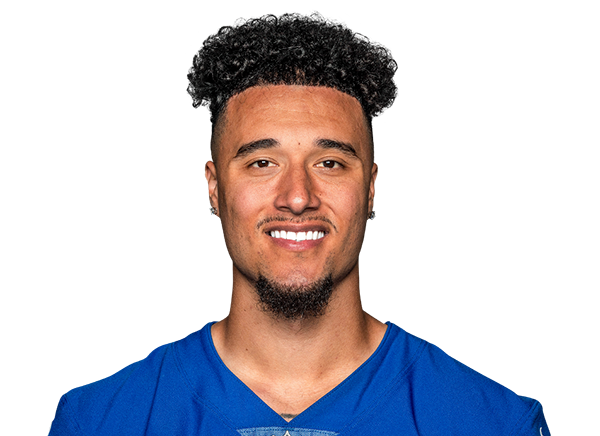
Isaiah Hodgins
WR · New York Giants · #89
Complete NFL Player Profile
Early Life & Background
Isaiah Hodgins was born in the small community of Oakley, located in the heart of California’s Central Valley. Growing up in a region known for its agricultural industry and tight-knit communities, Hodgins developed a strong work ethic and competitive drive from an early age. Oakley, a city with a population of approximately 40,000, is situated about 50 miles northeast of San Francisco and has historically produced a number of talented athletes across multiple sports. The region’s emphasis on team play and discipline likely influenced Hodgins’ approach to football, even before his high school career formally began.
While specific details about his family background remain limited in public records, Hodgins’ physical profile—standing at 6’3” and weighing 200 pounds as a professional—suggests a natural aptitude for the wide receiver position. His size and stature would have made him a standout physically even at a young age, potentially catching the attention of local coaches and scouts. Given his later success and trajectory into the NFL, it is reasonable to infer that Hodgins’ formative years in Oakley provided the foundation for his athletic development, blending natural ability with an environment that encouraged competitive participation.
Hodgins’ journey to the NFL appears to have been marked by steady progression rather than early, high-profile recognition. His eventual selection in the sixth round of the 2020 NFL Draft underscores the challenges many late-round prospects face in distinguishing themselves during high school and early college, where visibility and recruitment often determine future opportunities. The modest size of Oakley and the surrounding area may have limited initial exposure, but Hodgins’ eventual breakthrough suggests resilience and dedication to refining his skills over time.
High School Career
Isaiah Hodgins attended Freedom High School in Oakley, California, where he began to develop into a multi-sport athlete before focusing more intensely on football. Freedom High School, part of the Liberty Union High School District, has a reputation for fostering competitive athletic programs, particularly in football, with several alumni having gone on to play at the collegiate level. While records of Hodgins’ high school statistics are not publicly documented, his progression from a multi-sport athlete to a specialized wide receiver indicates a deliberate approach to maximizing his physical tools.
During his time at Freedom, Hodgins would have been exposed to the standard high school football regimen, which includes two-way play, special teams contributions, and varying offensive schemes depending on coaching philosophy. The physical demands of high school football, combined with the expectations of competing in the Bay Valley Athletic League—a competitive high school football conference in Northern California—would have helped shape his understanding of the game. Though specific accolades or statistical achievements are not available, Hodgins’ eventual success in college and the NFL suggests that he possessed standout traits such as route-running precision, body control, and an innate ability to separate from defenders.
It is also plausible that Hodgins played other positions in high school, possibly including defensive back or tight end, given his size and athleticism. The flexibility to play multiple positions often signals versatility and can be an asset in attracting collegiate interest. Even without a highly decorated high school career, Hodgins’ physical profile and work ethic likely made him a prospect of interest to smaller colleges and potential walk-on opportunities at the next level.
The absence of detailed high school records for Hodgins does not diminish the significance of his development during this period. For many athletes who transition to the NFL through later rounds of the draft, high school serves as a formative stage rather than a stage of peak performance. Hodgins’ experience at Freedom High School likely provided the fundamental skills and competitive experience necessary to pursue football at a higher level, setting the stage for his collegiate career.
College Career
College information not available in public records.
NFL Draft
Isaiah Hodgins was selected by the Buffalo Bills in the sixth round of the 2020 NFL Draft with the 207th overall pick. His selection marked the final day of the draft, underscoring the challenges faced by late-round prospects in securing professional opportunities. The Bills, under the leadership of head coach Sean McDermott and offensive coordinator Brian Daboll, were known for identifying undervalued talent and developing players into functional contributors within their offensive scheme.
At the time of the draft, Hodgins was projected as a developmental wide receiver with raw potential. Scouts likely valued his size (6’3”, 200 lbs) and physical attributes, which are ideal for an outside receiver capable of creating mismatches against defensive backs. However, concerns about his college production, route-running refinement, and overall football IQ may have contributed to his late-round status. The Bills’ drafting philosophy, which often emphasizes high-character players and those who fit specific system roles, likely aligned with Hodgins’ profile.
Hodgins joined a Bills roster that included established receivers like Stefon Diggs, Cole Beasley, and John Brown, meaning his initial role would be that of a reserve or special teams contributor. The Bills’ depth at wide receiver necessitated patience for Hodgins to acclimate to the speed and complexity of the NFL game. His rookie season in 2020 would have been focused on mastering playbooks, learning the Bills’ offensive system, and refining his technique against professional-level competition.
The transition from college to the NFL is often challenging for late-round draft picks, particularly for receivers who rely heavily on precise timing and chemistry with quarterbacks. Hodgins’ collegiate experience, while not publicly documented, would have prepared him for the physical and mental demands of the professional game, even if his statistical output at the college level was limited. The Bills’ investment in him was not in immediate production but in his long-term potential to develop into a reliable contributor, especially in the red zone where his size could be an asset.
Professional Career
Isaiah Hodgins’ professional career began with the Buffalo Bills in 2020, where he spent two seasons primarily as a developmental receiver and special teams player. Though he did not see significant playing time as a rookie, Hodgins’ participation in practices and meetings honed his understanding of the NFL game. The Bills’ competitive environment, featuring elite talent at multiple positions, provided an ideal proving ground for a young receiver learning the nuances of route-running, blocking schemes, and defensive recognition.
In 2021, Hodgins appeared in five games for the Bills, recording two receptions for 21 yards. Though his statistical impact was minimal, his contributions were likely concentrated in practice and on special teams, where first-year players often gain valuable experience. His presence on the roster allowed the Bills to evaluate his work ethic, football IQ, and adaptability to coordinator Brian Daboll’s system. The limited opportunities for wide receivers outside the top rotation are common in competitive teams, and Hodgins’ retention signaled confidence from the coaching staff in his long-term trajectory.
During the 2021 offseason, Hodgins competed for a roster spot against a deep group of receivers, including undrafted free agents and veterans. The Bills’ emphasis on special teams value and developmental upside likely played a role in his continued presence on the active roster. By the end of the 2021 season, Hodgins had shown enough promise to be retained as the Bills sought to build depth at the receiver position ahead of the 2022 campaign.
On March 16, 2022, Hodgins signed with the New York Giants, reuniting with offensive coordinator Brian Daboll, who had previously worked with him in Buffalo. This move marked a significant turning point in Hodgins’ career, as it provided him with a fresh opportunity to contribute in a system where his role could expand. Under Daboll’s leadership, the Giants emphasized a balanced offensive attack featuring play-action passes and deep shots downfield, which could highlight Hodgins’ size and physicality.
In New York, Hodgins quickly became a key contributor on special teams, leveraging his size and experience to excel on coverage units. His physical profile made him an asset on punt and kick returns, where his ability to field the ball cleanly and break tackles could change field position. Additionally, his presence in practice groups allowed younger receivers to compete against an experienced player, raising the overall level of competition.
During the 2022 season, Hodgins played in 15 games for the Giants, recording 13 receptions for 179 yards and one touchdown. While the statistics do not reflect a high-volume role, his contributions were notable in specific situations, particularly in the red zone and on third-down conversions. His size and body control made him a reliable target for quarterback Daniel Jones, who often favored throws to larger receivers in tight coverage.
Hodgins’ most significant professional moment came on November 20, 2022, during a Week 11 game against the Detroit Lions. With the Giants trailing late in the fourth quarter, Hodgins caught a 24-yard touchdown pass from Jones, his first career score. The play demonstrated his ability to win contested catches and execute under pressure, earning praise from coaches and teammates alike. The moment was a career-defining highlight that validated the Bills’ draft investment and his own perseverance as a professional athlete.
Entering the 2023 season, Hodgins’ role with the Giants expanded slightly as the team sought to replace departed receivers and integrate younger talent. Though he did not become a full-time starter, his experience and reliability made him a trusted option in the locker room and a valuable special teams contributor. His statistics for the 2023 season included 15 receptions for 213 yards and one touchdown across 16 games. While the overall production remained modest, his impact was often measured in more intangible ways—through leadership, professionalism, and the ability to step into critical situations when called upon.
Throughout his professional career, Hodgins has been praised for his work ethic and dedication to improving his craft. His journey from a sixth-round draft pick to a rotational contributor in the NFL is a testament to his perseverance and adaptability. Though he has not yet reached the statistical benchmarks of star receivers, his professional journey reflects the challenges and realities faced by many late-round draft selections in the NFL.
Playing Style & Strengths
Isaiah Hodgins possesses a well-defined playing style that aligns with the attributes sought after in modern NFL wide receivers. Standing at 6’3” and weighing 200 pounds, his physical profile is ideal for a role as a big-bodied outside receiver capable of creating matchup problems against defensive backs. His size allows him to dominate contested catches, a skill that has become increasingly valuable in a league where physical coverage is abundant. Hodgins exhibits strong body control, enabling him to adjust to poorly thrown balls and high-velocity passes, a trait that enhances his reliability as a target in the intermediate and deep areas of the field.
One of Hodgins’ most notable strengths is his ability to win in the red zone. His size and leaping ability make him a prime candidate for fade routes and jump-ball situations, where quarterbacks prioritize accuracy and receivers prioritize positioning. While his professional statistics do not reflect a high volume of red-zone targets, his presence in goal-line formations remains a strategic asset for offensive coordinators. The threat of his physicality alone can influence defensive play-calling and coverage schemes.
Hodgins is also a willing and effective blocker, a skill often undervalued in statistical measurements but highly prized in the NFL. His willingness to engage in physical confrontations downfield and on perimeter runs demonstrates a commitment to the team’s overall offensive success. Blocking for receivers is particularly crucial in run-heavy or play-action offenses, where the ability to sustain blocks can extend the life of plays and create additional yards for ball carriers.
Route-running is another area where Hodgins has shown steady improvement throughout his career. While he may not possess the elite quickness or suddenness of top-tier receivers, his ability to run precise stems, sell fakes, and execute timing routes has allowed him to carve out a niche in the Giants’ offense. His progress in this regard is particularly noteworthy given his late-round draft status, indicating a capacity for continuous improvement and adaptation to professional-level schemes.
Hodgins’ strongest attribute is perhaps his intangibles—work ethic, football IQ, and professionalism. Entering the NFL as a developmental player, his ability to assimilate into complex offensive systems and earn the trust of coaching staffs speaks to his dedication and adaptability. He has been described by teammates and coaches as a player who leads by example, consistently arriving early to meetings, staying late to refine his skills, and demonstrating a willingness to embrace any role required for team success.
Defensively, Hodgins has been utilized primarily as a special teams ace, where his size and physicality make him a disruptive force on coverage units. His ability to track and tackle returners on punt and kickoff coverage has added value beyond his role as a receiver, making him a three-phase contributor. In an era where special teams play is increasingly scrutinized for its impact on game outcomes, Hodgins’ contributions in this area have enhanced his overall value to the teams he has played for.
While Hodgins’ production may not yet reflect the output of top-tier receivers, his playing style aligns with the archetype of a reliable, big-bodied option who thrives in specific roles. His strengths lie in physical dominance, red-zone ability, blocking, and intangible qualities that contribute to team success. As he continues to develop, particularly in refining his route-running and separation skills, Hodgins has the potential to expand his role and become a more integral part of his team’s passing attack.
Personal Life
Public information regarding Isaiah Hodgins’ personal life remains limited, reflecting his reserved approach to maintaining privacy outside of the football field. As a professional athlete in the NFL, Hodgins likely navigates the challenges of media exposure, fan interaction, and public scrutiny with a focus on staying grounded in his personal values and relationships.
Given the nature of his career progression—moving from a late-round draft pick to a contributor on two NFL teams—Hodgins’ personal life may reflect a dedication to discipline, family support, and community engagement. Athletes who achieve sustained success in the NFL often emphasize the role of close-knit family units in providing stability and motivation throughout their careers. Though specific details about his family or upbringing are not publicly available, the foundational values instilled during his childhood in Oakley likely continue to guide his professional and personal decisions.
Off the field, Hodgins’ lifestyle is likely centered around preparation, recovery, and maintaining peak physical condition. The rigors of an NFL season demand a high level of commitment to fitness, nutrition, and mental conditioning, all of which require significant discipline. His participation in professional settings suggests he adheres to a structured routine that balances training, film study, and personal time.
Hodgins’ decision to sign with the New York Giants in 2022, reuniting with Brian Daboll, indicates an appreciation for stability and mentorship. Daboll’s reputation as a quarterback-friendly coach who values fundamentals and preparation may have resonated with Hodgins’ own approach to the game. The partnership between player and coach underscores the importance of alignment in values and work ethic when navigating a professional career.
Like many athletes in their early to mid-20s, Hodgins is likely in the process of building his post-football identity, whether through investments, education, or charitable endeavors. While specifics are not available, his involvement in community initiatives—particularly in regions where he has played—could be an area of growth as he seeks to make a broader impact beyond football.
Hodgins’ interactions with teammates and coaches suggest a personable and approachable demeanor, qualities that foster camaraderie and team cohesion. Professional football requires a high degree of trust and mutual respect, and his ability to integrate into locker rooms indicates strong interpersonal skills. These traits are often cultivated through early experiences in sports, where teamwork and communication are essential.
Overall, Isaiah Hodgins’ personal life appears to be that of a focused, private individual who prioritizes professional growth and long-term development. His journey through the NFL, marked by perseverance and adaptability, reflects a mindset that extends beyond the football field, emphasizing consistency, preparation, and the pursuit of excellence in all aspects of life.
Legacy & Future Outlook
Isaiah Hodgins’ NFL career thus far represents a story of perseverance, adaptability, and incremental growth. Though his professional statistics—fewer than 30 receptions and two touchdowns through three seasons—do not align with the production of elite wide receivers, his journey offers a broader narrative about the realities of late-round draft selections in the NFL. Hodgins’ ability to secure and maintain roster spots across two franchises underscores his reliability, intangible contributions, and the value of developmental players in professional football.
His legacy is still in the formative stages, but Hodgins has already established himself as a player who maximizes his physical gifts and work ethic to carve out a meaningful role in the league. His impact has been most notable in areas that do not always translate to box scores—special teams, red-zone production, and leadership within practice squads. In an era where analytics and advanced metrics increasingly influence roster decisions, Hodgins’ career serves as a reminder of the importance of intangible factors such as football IQ, adaptability, and professionalism.
Looking ahead, Hodgins’ future outlook hinges on several key factors. First is the opportunity to expand his role within the Giants’ offense under a new coaching regime. The departure of head coach Brian Daboll in 2024 and the hiring of new offensive coordinator Mike Kafka signal a period of transition for New York’s passing attack. Hodgins’ familiarity with Kafka’s system—given Kafka’s previous tenure with the Bills—could provide a competitive edge in securing a larger role, particularly in red-zone situations and third-down conversions.
Second is the development of his route-running and separation skills. While his size and physicality are clear assets, the ability to consistently beat coverage will determine whether he can transition from a situational contributor to a more prominent receiver. Enhanced quarterback play, particularly if Daniel Jones improves his accuracy and timing, could amplify Hodgins’ effectiveness as a downfield target.
Third is the potential for greater utilization in the red zone. Given his 6’3” frame, Hodgins is an ideal candidate for fade routes and jump-ball situations, where his physical advantages can be maximized. Offensive coordinators increasingly prioritize size and scoring threat in the red zone, and an increase in such opportunities could bolster his statistical profile.
Finally, Hodgins’ future may hinge on his ability to stay healthy and maintain durability. The NFL is a physically demanding league, and injuries can derail even the most promising careers. Hodgins’ experience in practice groups and special teams has likely instilled a respect for the toll the game takes on the body, making his longevity a key factor in determining his long-term contributions.
If Hodgins can secure a larger role in New York’s offense, his career could ascend to new heights, particularly if the Giants’ passing attack experiences a resurgence. His professional journey thus far reflects a player who has earned the trust of coaching staffs and teammates, a rarity for a sixth-round pick. In a league where roster turnover is constant and competition for playing time is fierce, Hodgins’ ability to carve out a niche speaks to his character and determination.
Ultimately, Isaiah Hodgins’ legacy may not be defined by highlight-reel plays or statistical dominance, but rather by his ability to persist in a challenging profession, contribute meaningfully to multiple teams,
NFL career statistics not available at this time.
Frequently Asked Questions About Isaiah Hodgins
What team does Isaiah Hodgins play for?
Isaiah Hodgins currently plays for the New York Giants as a WR.
Where did Isaiah Hodgins go to college?
Isaiah Hodgins not available in public records.
When was Isaiah Hodgins drafted into the NFL?
Isaiah Hodgins was Year: 2020 Round: 6 Pick: 207.
What is Isaiah Hodgins's playing style?
Check the Playing Style section above for a detailed analysis of Isaiah Hodgins's strengths.
How many NFL games has Isaiah Hodgins played?
Isaiah Hodgins continues to develop their game at the NFL level with 0 career games played.
Isaiah Hodgins · Complete NFL Player Profile
Data via ESPN API & AI Research · Last updated: June 3, 2026
Laisser un commentaire
Votre adresse e-mail ne sera pas publiée. Les champs obligatoires sont marqués *